Is Public Wi-Fi Safe? What Really Happens at the Coffee Shop
Apr 26, 2026 · 3 min read
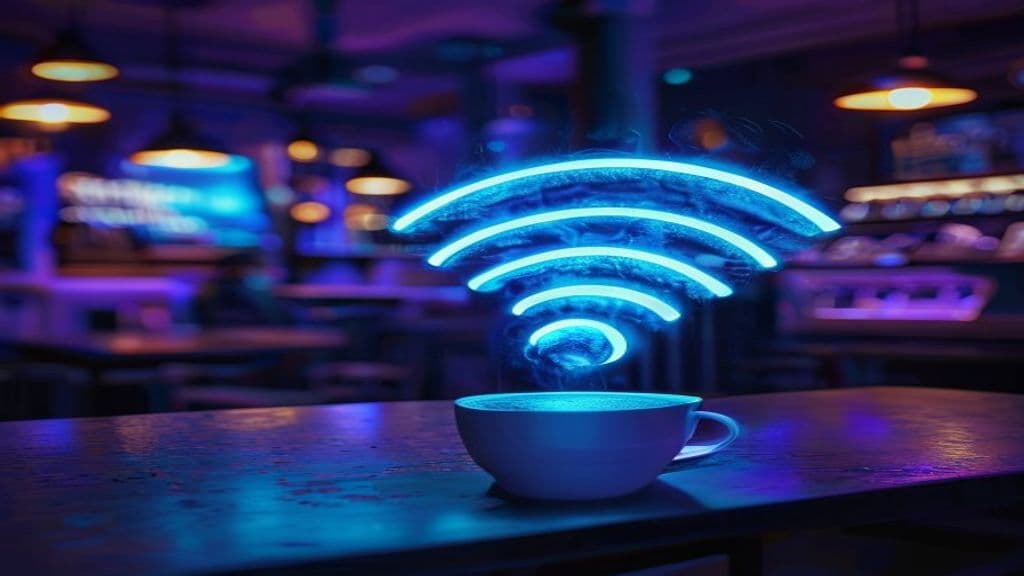
You've probably heard that using the coffee shop Wi-Fi is asking for trouble, and that hopping onto an open network is one keystroke away from disaster. The truth in 2026 is more reassuring — and a lot more useful. The internet has quietly changed under our feet, and the dramatic 'hacker stealing your password from across the room' story is mostly out of date. That doesn't mean public networks are entirely risk-free, but it does mean the real dangers today are quite different from the ones we were all warned about years ago. Knowing which fears to keep and which to retire saves you a surprising amount of needless worry.
Why it's safer than it used to be
Almost every reputable website now uses encryption — that's the little padlock symbol and the 'https' at the start of the web address. In plain terms, it scrambles the connection between your device and the site into gibberish, so even someone sitting on the very same network can't simply read your bank login, your emails, or your messages as they travel back and forth. This single, sweeping change quietly fixed most of what made public Wi-Fi genuinely frightening a decade ago, and it happens automatically without you having to lift a finger.
What can still go wrong
The remaining risks are less about silent eavesdropping and more about old-fashioned trickery. A scammer might set up a fake network with a friendly, official-looking name like 'Free Airport WiFi,' hoping you'll connect without a second thought. Once you do, they can try to nudge you toward convincing fake login pages or pop-up warnings urging you to install an 'update' or security tool. The weak point, in other words, isn't really the Wi-Fi signal anymore — it's what someone can convince you to click or type while you happen to be connected to it.
- Check the exact network name with the staff before connecting.
- Look for 'https' and the padlock before entering any password.
- Don't install 'updates' a network suddenly asks you to.
- Save your most sensitive logins for a trusted connection.
Simple habits that cover you
You don't need to fear the café or the airport lounge, you just need to stay a little deliberate. Confirm the real network name with a staff member before you join, avoid acting on surprise pop-ups no matter how official they look, and turn on two-factor login for your important accounts so that a stolen password alone is never enough to get in. These few habits cover the vast majority of real-world risk. And if a warning or a link appears while you're connected and something about it feels off, it is always worth checking where it actually leads before you tap it.
→Verify a sketchy pop-up link with the TrueID Scam-Link CheckerBuild a quiet baseline
The strongest protection isn't a single clever gadget or app — it's a small handful of settings done just once and then left quietly running in the background: unique passwords for every account, two-factor login on the ones that matter, and a steady awareness of what you choose to share. With those few things in place, hopping onto public Wi-Fi becomes a complete non-event rather than a gamble you have to think about. TrueID.Help lays out exactly those habits in plain, friendly steps, so you can travel, work remotely, and sip your coffee without second-guessing every single network you happen to join.
→Run through the TrueID privacy checklist to lock in the basicsTrueID.Help is a protection toolkit, not an insurance policy or legal service. This article is general guidance — always follow the specific instructions from your bank and the official authorities for your situation.
Put this into action with TrueID.Help
A calm, guided way to protect your identity, get alerted to breaches, and recover fast — with a free plan to start.
Related reading
- Passwords & LoginPassword Managers: Why They're Safer Than Your MemorySecurity advice always lands on the same instruction: use a long, unique passwor…
- Passwords & LoginTwo-Factor Authentication: The 5-Minute Habit That Stops Most HacksTwo-factor authentication sounds technical, but the idea is simple: it adds a se…
- Passwords & LoginHow to Create Passwords Even Hackers Can't CrackA strong password isn't about clever symbols or a word you'll never remember. It…